
If you’re getting ready to breed a dog, you’re probably already swimming in acronyms: OFA, PennHIP, BAER, CAER. Each one represents a way to look under the hood and check for inherited problems before they get passed along to the next generation. The CAER eye exam is the one that focuses specifically on the eyes, screening for the kinds of genetic conditions that can cause discomfort, vision loss, and heartbreak when they show up in puppies a few years down the line.
CAER exams aren’t just for breeders, either. Plenty of dog owners want to know whether their pet is carrying any silent eye conditions that haven’t shown clinical signs yet. At Veterinary Vision Center in Shreveport, our board-certified veterinary ophthalmologist performs CAER exams for breeding dogs, breed club requirements, and any owner who wants a thorough evaluation of their dog’s eye health. If you’d like to schedule a CAER exam or have questions about what’s involved, our team is here to walk you through it.
What Is a CAER Eye Exam?
CAER stands for Companion Animal Eye Registry. It’s a screening program managed by the Orthopedic Foundation for Animals (OFA), and it replaced an earlier program called CERF that some longtime breeders still remember by name. The goal is straightforward: detect inherited eye disease in dogs (and occasionally other animals) so that breeders can make informed decisions and owners can catch problems early.
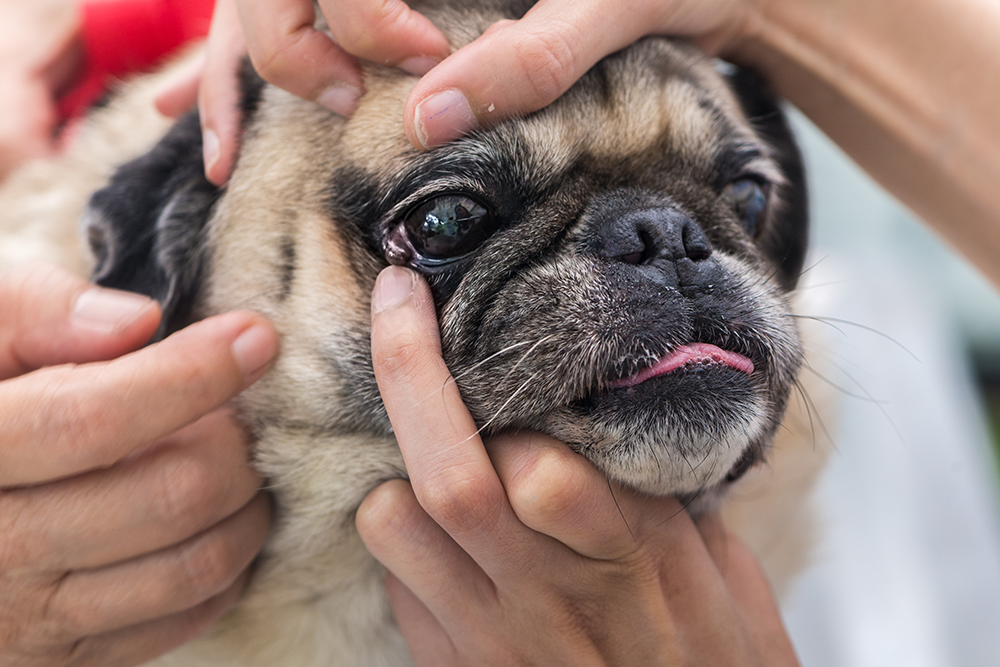
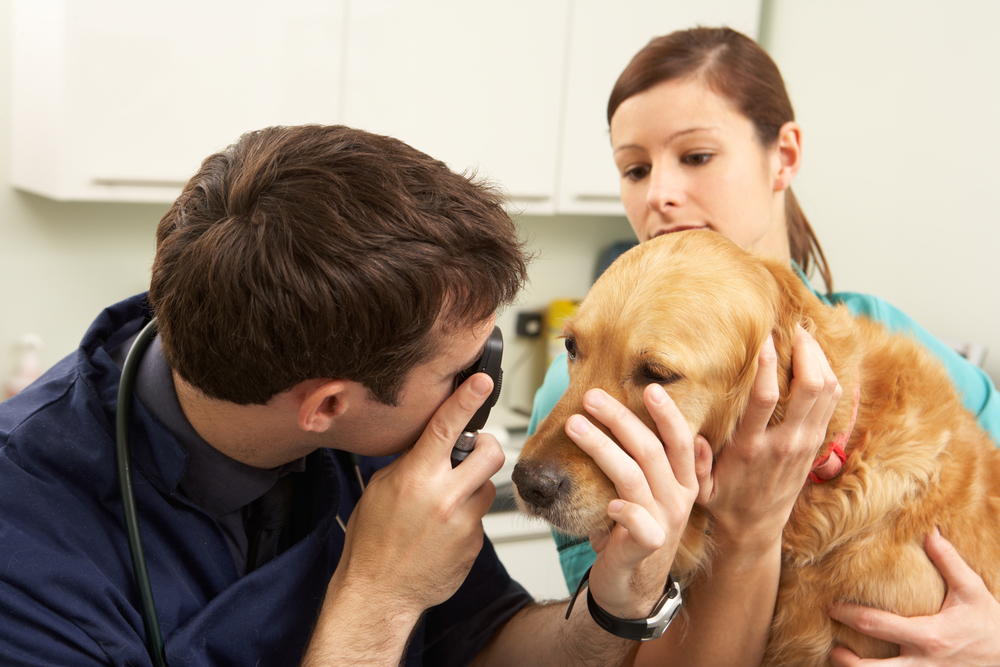
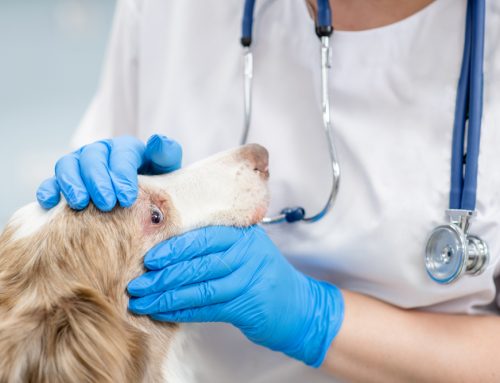
A CAER exam is a thorough, painless eye examination performed by a board-certified veterinary ophthalmologist using a standardized form developed by the American College of Veterinary Ophthalmologists. Nothing about it requires sedation, and most dogs tolerate it easily. The exam takes about 20 to 30 minutes, including the time it takes for dilation drops to work.
When the exam is complete, the ophthalmologist documents any findings on an official form. You can then submit the results to OFA, where they’re added to a public registry that breeders, breed clubs, and other ophthalmologists can reference. Submission is optional, but it’s the part of the process that actually contributes to genetic health data for the breed as a whole.
Why CAER Exams Matter
A surprising number of inherited ocular diseases don’t produce obvious symptoms in their early stages. A dog can carry the genes for progressive retinal atrophy, develop early lens changes, or have a congenital eye abnormality that won’t be visible without specialized equipment. Without screening, those conditions can quietly pass to the next generation before anyone realizes there’s an issue.
CAER exams matter for several reasons:
- Breed health: Reducing the prevalence of inherited eye disease starts with knowing which dogs carry it. Many breed clubs require CAER clearances before approving a dog for breeding.
- Informed breeding decisions: Knowing your dog has a heritable eye condition (or carries traits that could combine poorly with another dog’s) helps you choose mates more thoughtfully.
- Early intervention for individual pets: Some conditions are progressive but slow. Catching them early means we can monitor and intervene before they affect quality of life.
- Documentation for buyers: If you’re producing puppies, CAER results give buyers confidence that the parents have been thoroughly vetted.
What Happens During a CAER Exam?
The exam itself is gentle and uses tools that look surprisingly low-tech to anyone who’s been to an ophthalmologist for their own eyes:
- Initial assessment: We start with a brief look at the eyes in normal lighting, checking for any obvious abnormalities and watching how your dog reacts to visual cues.
- Pupil dilation: Drops are placed in each eye to dilate the pupils. This takes about 15 to 20 minutes to take effect and allows us to see the back of the eye clearly.
- Slit lamp biomicroscopy: A specialized microscope-like instrument lets us examine the cornea, anterior chamber, iris, and lens in fine detail.
- Indirect ophthalmoscopy: With a head-mounted instrument and a handheld lens, we examine the retina, optic nerve, and other structures at the back of the eye.
- Documentation: Findings are recorded on the standardized CAER form. You receive a copy, and you can submit results to OFA at your discretion.
For most dogs, the hardest part of the appointment is sitting still while the drops do their work. Plan for the dilation to wear off over the next four to six hours, during which your dog will be more sensitive to bright light.
What Conditions Does a CAER Exam Screen For?
The OFA Blue Book lists the inherited and presumed-inherited eye conditions that a CAER exam evaluates. The full list is extensive, but here are the ones we look for most often, grouped by the part of the eye they affect. The CAER exam doesn’t directly test for all of these, but a thorough examination in combination with the CAER exam will pick them up. We recommend a full eye exam for any breeding animal. The items on this list are the conditions that indicate a pet should not be considered for breeding:
Lens Conditions
The lens sits behind the iris and focuses light onto the retina. When something goes wrong here, vision is directly affected.
- Hereditary cataracts: A cataract is any cloudiness of the lens. Some develop with age, but juvenile hereditary cataract appears in young dogs and is genetic in origin. Surgical removal is often successful, and we offer cataract surgery with a 95% success rate.
- Primary lens luxation: Primary lens luxation happens when the lens detaches from its supporting fibers and dislocates within the eye. It’s most common in certain terrier breeds and can lead to glaucoma and vision loss if not addressed quickly.
Retinal Conditions
The retina is the light-sensitive tissue at the back of the eye that converts light into nerve signals. Retinal disease often cannot be detected without specialized equipment.
- Progressive retinal atrophy (PRA): A group of inherited conditions that cause the retina to gradually deteriorate. Affected dogs typically lose night vision first, then progress to complete blindness. PRA appears in many breeds, and DNA testing combined with CAER exams provides the most complete picture of risk.
- Vitreous degeneration: Changes in the gel-like substance that fills the back of the eye. Vitreous degeneration can sometimes contribute to retinal detachment and is more common in some terrier breeds.
Eyelid and Eyelash Abnormalities
These conditions affect comfort and corneal health rather than vision directly, but they can lead to serious complications when left untreated.
- Entropion: When the eyelid rolls inward, eyelashes rub against the cornea, causing irritation, ulcers, and chronic discomfort. Surgical correction is often needed.
- Ectropion: The opposite problem, where the lower eyelid sags outward, exposing the inner surface to irritation and infection. Common in some hound and giant breeds.
- Distichiasis and ectopic cilia: Abnormal eyelashes that grow from the wrong location or in the wrong direction, often rubbing on the cornea.
- Cherry eye: Prolapse of the gland of the third eyelid, producing a visible pink or red swelling at the inner corner of the eye. Surgical replacement is preferred over removal because the gland produces a significant portion of tear film.
Corneal Conditions
The cornea is the clear front surface of the eye, and even small changes here can affect vision and comfort.
- Corneal dystrophy: Bilateral, often symmetric deposits in the cornea that can be inherited. Most cases don’t significantly affect vision, but some progress to ulceration.
Glaucoma and Other Internal Eye Conditions
- Primary glaucoma: A buildup of pressure within the eye that damages the optic nerve and leads to vision loss. Some breeds are predisposed, and while eye pressure testing isn’t a direct part of the CAER exam, dogs with glaucoma are recommended not to be bred.
- Optic nerve colobomas: Congenital defects in the optic nerve that can affect vision and are inherited in some breeds (notably Collies as part of Collie Eye Anomaly).
- Uveal cysts: Fluid-filled structures within the iris or attached to it. Most don’t require treatment, but some can drift into the field of vision or contribute to glaucoma in certain breeds.
Tear Film Disorders
- Dry eye (KCS): Inadequate tear production leads to chronic irritation, recurrent corneal ulcers, and thickening or pigmentation of the cornea. Some breeds are strongly predisposed, and lifelong management is usually needed. Tear film testing isn’t a part of the CAER test, but dogs with dry eye are recommended not to be bred.
CAER Exams vs. DNA Testing for Eye Disease
These two screening approaches complement each other rather than replace each other. CAER testing shows phenotypes- what genes a dog has actually expressed. DNA testing shows genotypes- what’s actually in their genetic makeup. Pets can have diseases in their genome that aren’t visible through their phenotype, so testing both is valuable. Pets can also have diseases that don’t show up in DNA testing, and reporting those through CAER testing is what helps the research that OFA does to ensure dog breeding is done responsibly and ethically.
| CAER Exam | DNA Testing | |
| What it tells you | What’s actually present in the eyes right now | Genetic risk for specific known conditions |
| Detects | Any visible abnormality, congenital or acquired | Only conditions with identified genetic markers |
| Frequency | Repeated annually for breeding dogs | One-time, results are lifelong |
| Limitations | Cannot identify carriers without visible disease | Doesn’t catch conditions outside the tested gene panel |
For breeding decisions, both are valuable. DNA testing identifies carriers who may produce affected puppies even when both parents look healthy. CAER exams catch conditions that don’t have a known genetic test yet, and they document what’s actually happening in the eye over time.
How Often Should CAER Exams Be Done?
For breeding dogs, annual CAER exams are the standard, since some inherited conditions develop or progress with age. A dog who passed at age 2 may show changes at age 4 or 6, particularly for conditions like PRA, hereditary cataracts, and primary lens luxation.
For non-breeding dogs, a single CAER exam can give you peace of mind and a baseline to compare against if changes show up later. Some owners of high-risk breeds choose to repeat exams every few years even when their dog isn’t being bred.
If you’ve never been through the process before, CAER exam forms and breed-specific information are available through our helpful links page so you can prepare in advance.
Frequently Asked Questions About CAER Eye Exams
Does my dog need to be sedated for a CAER exam?
No. The exam is non-invasive and most dogs tolerate it well. We use dilating drops and quiet, low-light examination techniques rather than sedation.
My dog already has known eye disease. Is a CAER exam still useful?
Yes, particularly if you’re considering breeding. The exam documents the current state of both eyes and can identify additional findings that affect breeding recommendations. It’s also useful for tracking progression over time.
Will my dog’s CAER results be public?
Only if you choose to submit them. Many breeders submit voluntarily because public registry results contribute to breed health data and are often required by breed clubs. If you don’t submit, the results stay between you and the ophthalmologist.
How long are CAER results valid?
Results are valid for 12 months from the date of the exam. Annual re-examination is the standard for breeding dogs.
Can my regular veterinarian perform a CAER exam?
CAER exams must be performed by a board-certified veterinary ophthalmologist using the standardized OFA form. Your primary care veterinarian may be the first to notice eye changes, but the screening exam itself is a specialty service.
What happens if my dog “fails” the exam?
A finding on a CAER exam doesn’t necessarily mean your dog cannot be bred or that they have a serious problem. Some findings are minor and don’t affect breeding recommendations. Others are significant. We discuss results with you in detail and explain what each finding means for your individual dog and any breeding plans.
Scheduling Your Dog’s CAER Exam
Whether you’re a breeder working toward breed club clearances, a new owner curious about your puppy’s genetic background, or someone who just wants to know everything is okay behind those big brown eyes, a CAER exam is one of the most thorough ways to evaluate your dog’s eye health.
At Veterinary Vision Center in Shreveport, we offer CAER exams as part of our comprehensive ophthalmology services for dogs across Louisiana, East Texas, and Southern Arkansas. To request an appointment or to ask any questions about what’s involved, contact us and we’ll help you get started.

Leave A Comment