

After Eye Surgery: Keeping Your Pet Comfortable During Recovery
Recovering from eye surgery can feel a little overwhelming at first, but with steady home care, most pets heal beautifully. Because the eye is so delicate, even a missed dose, a quick paw rub, or too much activity can interfere with healing and sometimes lead to complications that require additional treatment. Knowing what’s normal during recovery, and what signals a problem, can make the entire process smoother and far less stressful.
At Veterinary Vision Center in Shreveport, we make aftercare as clear and manageable as possible for every ophthalmic surgery. Our board-certified ophthalmologists walk you through what to expect, when and how to give medications, and which changes should prompt a call right away. You can request an appointment for post-op follow-up, or contact us anytime with questions or concerns.
Why Did Your Pet Need Eye Surgery?
Understanding the “why” helps you protect healing. We treat a large number of eye conditions and perform many eye surgeries, from routine procedures to complex reconstructive and vision-saving interventions that require board-certified ophthalmologist expertise. Proper post-surgical care is critical no matter what type of surgery your pet had.
Here are some of our most common eye surgeries:
Corneal Surgeries for Ulcers and Injuries
Corneal ulcers are one of the most common eye emergencies we treat. While superficial ulcers often heal with medication, deep or complicated ulcers require surgical intervention to prevent perforation and loss of the eye. We perform conjunctival grafts, where tissue from the white of the eye is sutured over the ulcer to provide structural support and blood supply for healing. For severe cases, we may use specialized techniques like corneal debridement to remove diseased tissue or apply tissue adhesives.
Eyelid Conformational Surgeries
Cherry eye happens when the third eyelid gland pops out, forming a red bump in the corner of the eye. Our prolapsed nictitans gland replacement surgery repositions and anchors the gland back into its normal location to protect tear production. Unlike older removal techniques that often led to dry eye later in life, our replacement procedure preserves the gland’s tear-producing function, which is critical for long-term eye health.
Entropion is when the eyelid rolls inward and lashes rub the cornea, causing pain, squinting, discharge, and potentially serious corneal ulcers. We perform entropion correction surgery to remove a precise crescent of skin and reposition the eyelid margin away from the eye surface. This procedure requires careful measurement to avoid overcorrection, and healing takes 10-14 days with suture removal at a recheck appointment.
Medial canthoplasty addresses conditions where the inner corner of the eyelids allows excessive exposure or conformational problems that lead to chronic irritation. This procedure tightens or reconstructs the medial canthus (inner eye corner) to improve eyelid function and protect the cornea. We commonly perform this surgery in brachycephalic breeds with prominent eyes or pets with chronic medial entropion that causes constant tearing and eye inflammation.
Dry Eye and Tear Production Procedures
Dry eye, or keratoconjunctivitis sicca (KCS), occurs when tear production is insufficient to keep the eye properly lubricated. While many cases respond to lifelong medication, severe cases that don’t improve may benefit from parotid duct transposition surgery. This advanced procedure reroutes a salivary duct to the eye area so saliva moistens the cornea in place of tears. It’s a complex surgery with specific post-operative care requirements, but it can dramatically improve quality of life for pets who haven’t responded to medical management.
Glaucoma Management and Pressure-Reducing Surgeries
Glaucoma is a painful condition where increased pressure inside the eye damages the optic nerve and retina, often leading to irreversible blindness. When medication can’t control pressure adequately, we perform surgical procedures to lower intraocular pressure and preserve any remaining vision. Options include laser procedures to reduce fluid production, placement of drainage implants to help fluid exit the eye, or cyclophotocoagulation to decrease fluid production by treating the ciliary body. These surgeries require specialized equipment and expertise, and post-operative pressure monitoring is essential to ensure success.
Lens Luxation Repair
Lens luxation occurs when the lens detaches from its normal position and either falls forward into the front chamber of the eye or backward into the vitreous. This is a painful emergency that can cause sudden glaucoma and vision loss. Certain breeds, particularly terriers, are genetically predisposed. Emergency surgical removal of the luxated lens is often necessary to relieve pain, control pressure, and prevent further damage. This delicate microsurgery requires specialized instrumentation and must be performed quickly to preserve the eye and any remaining vision.
Cataract Surgery and Lens Replacement
Cataract surgery removes cloudy lenses to restore vision. Our cataract procedures achieve a 95% success rate for restoring pet sight, and we implant artificial lens implants when possible for focused vision. The surgery uses phacoemulsification, where ultrasonic energy breaks up the cataract so it can be removed through a tiny incision. Careful aftercare prevents inflammation and protects results. This procedure requires microsurgical skills, specialized equipment, and extensive post-operative medication protocols including multiple eye drops given several times daily for weeks.
Your Pet’s First 48 Hours: What’s Normal?
The first two days set the tone for recovery. Grogginess after anesthesia is common. Mild squinting, tearing, or bloodshot eyes are normal and should ease.
- Pain relief starts right away. Give medications exactly on schedule- consistent dosing keeps your pet comfortable and prevents pressure changes. Recognizing common eye pain signs helps you monitor comfort levels throughout recovery.
- The incision may look swollen or bruised with a small amount of clear or pink-tinged discharge. Do not clean or touch the site unless instructed.
What Isn’t Normal After Eye Surgery for Pets?
Call us right away for eye emergencies: worsening pain after initial improvement, thick yellow or green discharge, stitches coming out or incision opening, the eye looking sunken or bulging compared to after surgery, or increasing cloudiness or color changes. Nonstop bleeding, sudden severe swelling, a big change in pupil size or eye shape, or extreme distress despite medication also warrants a call to us. Fast help protects the surgical outcome. For emergencies after hours, contact us at (318) 393-7033.
Feeding Your Pet After Eye Surgery
After eye surgery, especially cataract surgery, it is best to keep your pet’s meals simple and consistent. Even though it is tempting to offer comfort treats, rich foods can cause stomach upset and interfere with medication schedules. Vomiting or straining is more than just unpleasant- it can temporarily increase pressure in the eye and disrupt healing. For the first one to two weeks, avoid fatty and sugary foods entirely, including table scraps, cheese, fried foods, greasy meats, sugary snacks, and peanut butter. Instead, stick to your pet’s normal diet or the post-operative diet recommended by your veterinarian, and use small portions of low-fat options if you need to help give medications.
This guidance matters because cataract surgery temporarily disrupts the eye’s natural protective barriers, especially the blood-aqueous barrier that normally keeps the inside of the eye clear and stable. Surgery causes controlled inflammation and makes tiny blood vessels more “leaky” during early healing, which can allow more proteins and inflammatory material into the fluid inside the eye. If blood fat levels spike from a rich meal during this period, lipid particles can be more likely to move into spaces they do not belong and contribute to haze or fatty deposits that complicate recovery, especially in pets prone to high triglycerides. Keeping meals low-fat and low-sugar supports stable inflammation control and gives the eye the cleanest environment possible to heal.
Protecting the Surgical Site: Cones, Space, and Supervision
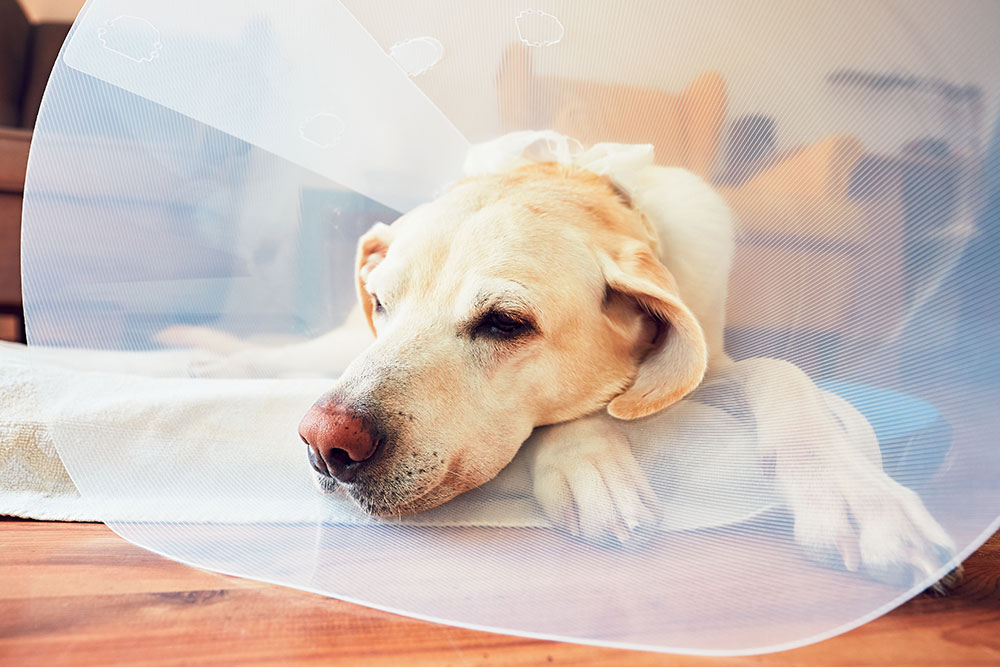
The biggest risk is rubbing or pawing at the eye. One moment can damage repairs. Elizabethan collars are best. If your pet resists, try making a cone comfortable with treats and gradual practice. Two fingers should fit between collar and neck.
- Soft or inflatable collars may help some pets but can allow access to the eye. If your pet can reach their face, return to a traditional cone. Some pets need both an inflatable collar and traditional E-collar.
- Set up a quiet recovery room. Avoid stairs, high furniture, and busy areas. Use short, leashed bathroom breaks instead of free roaming for the first week. Use a harness instead of a collar to avoid applying pressure on the neck, which can increase eye pressure. Understanding how to survive crate rest helps maintain activity limits while keeping your pet mentally engaged.
- Supervise any time outside the recovery space. Even calm pets may jump or run when excited, which can raise eye pressure and harm healing. Remove their access to any furniture that they could rub their face on. Don’t allow other pets to lick their surgical site.
- Playtime: Do not encourage any play that involves head shaking, like tug of war. Don’t provide any hard chews or long objects like sticks or bully sticks that could accidentally hit the eyes.
Giving Eye Medications Without Stress
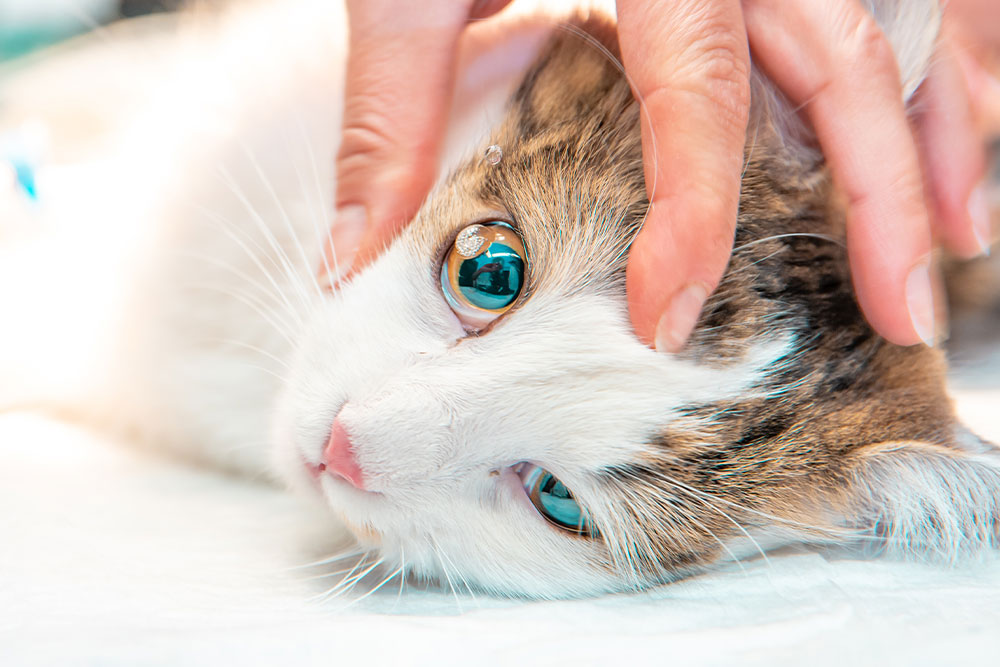
Multiple drops or ointments are common after surgery. A calm routine helps. Gather supplies first: medications, treats, clean hands, and a helper if needed. Administering eye medications to your pet requires patience and proper technique.
- For dogs, stabilize the head gently against your body. Rest your hand holding the bottle on their head so it moves with them if they flinch.
- For cats, patience helps. A towel wrap can provide gentle restraint. Applying eye drops or ointment to your cat’s eyes requires a calm approach and sometimes gentle restraint.
- Pull the lower eyelid down to make a small pocket. Place drops into the pocket without touching the tip to the eye or lashes. For ointment, apply a thin ribbon to the inner lower lid, then close the eye gently to spread. You can also apply ointment to your clean finger and wipe the ointment into the eyelid pocket if it’s easier.
If you’re using multiple medications, wait at least five minutes between them and use drops before ointment to avoid washing out the first dose. Follow label storage instructions and discard anything discolored or with particles. Administering eye medications properly ensures your pet receives the full benefit of treatment.
FAQs: Quick Answers for Common Questions
How long will my pet need a cone?
Most pets need a cone for 10–14 days, or until your veterinarian confirms the incision and eye surface are safe. Follow your specific discharge instructions.
What if I miss a medication dose?
Give it when you remember unless told otherwise. Do not double up without guidance. If multiple doses are missed, call us for a quick plan update.
Can my pet go for walks?
Short, calm, leashed walks for bathroom breaks are fine unless your discharge sheet says otherwise. Avoid running, jumping, and rough play until cleared.
Is discharge normal?
A small amount of clear or slightly cloudy discharge can be normal early on. Thick yellow/green discharge or a bad smell is not- contact us.
When should I schedule follow-ups?
We’ll set these before you leave. Follow-ups are essential to check pressure, healing, and medication response using our advanced diagnostic equipment including tonometry and fluorescein stain tests. If you need to reschedule, request an appointment promptly.
Your Partnership Creates Successful Outcomes
Great surgical work needs great home care. Your consistency with medications, cone use, and activity limits protects healing and results. We know this can feel overwhelming- our team is here to help, answer questions, and guide you through every step.
Trust your instincts if something seems off. You know your pet best, and early calls prevent bigger issues. At Veterinary Vision Center, we treat every pet like family and support you through recovery. Most pets heal well with a calm routine and quick attention to concerns. We’re here to guide you, ease worries, and support your pet’s comfort every day. Contact us today or schedule now to partner with our team on your pet’s recovery.

Leave A Comment