


When you first notice your dog hesitating at the top of the stairs in dim lighting or your cat bumping into furniture they’ve navigated easily for years, it’s natural to feel concerned. These subtle changes can be the early signs of progressive retinal atrophy, an inherited degenerative disease affecting the retina. While receiving a PRA diagnosis can feel overwhelming, understanding this condition and working with specialized ophthalmology experts can help your pet maintain an excellent quality of life.
At Veterinary Vision Center, our board-certified specialist has extensive experience diagnosing and managing PRA, and we’re here to guide you through every stage of your pet’s journey with compassion and expertise.
The Genetics Behind Progressive Retinal Atrophy
Progressive retinal atrophy follows an autosomal recessive inheritance pattern in most cases, meaning a pet must inherit two copies of the mutated gene, one from each parent, to develop the disease. This genetic basis has important implications for both breeding decisions and understanding your pet’s diagnosis.
Both PRA in dogs and PRA in cats can occur, though the specific mutations and forms differ between species and breeds.
The genetic mutations affect how photoreceptor cells in the retina develop and function. These specialized cells, rods and cones, convert light into electrical signals that the brain interprets as vision. In PRA, these photoreceptors gradually deteriorate over time, leading to progressive vision loss.
Why are certain breeds more susceptible? Different breeds carry specific genetic mutations that have been passed down through generations. Some breeds have higher prevalence rates due to historical breeding practices that inadvertently concentrated these genes.
Genetic screening in breeding programs has become essential for reducing PRA incidence. At Veterinary Vision Center, we can coordinate genetic testing and provide counseling for breeders and pet owners making informed breeding decisions.
Recognizing the Signs as PRA Progresses
The progression of vision loss in PRA typically follows a predictable pattern, though the timeline varies depending on the specific form and age of onset.
Early signs pet owners often notice
- Reluctance to go outside after dark or hesitation in dim lighting
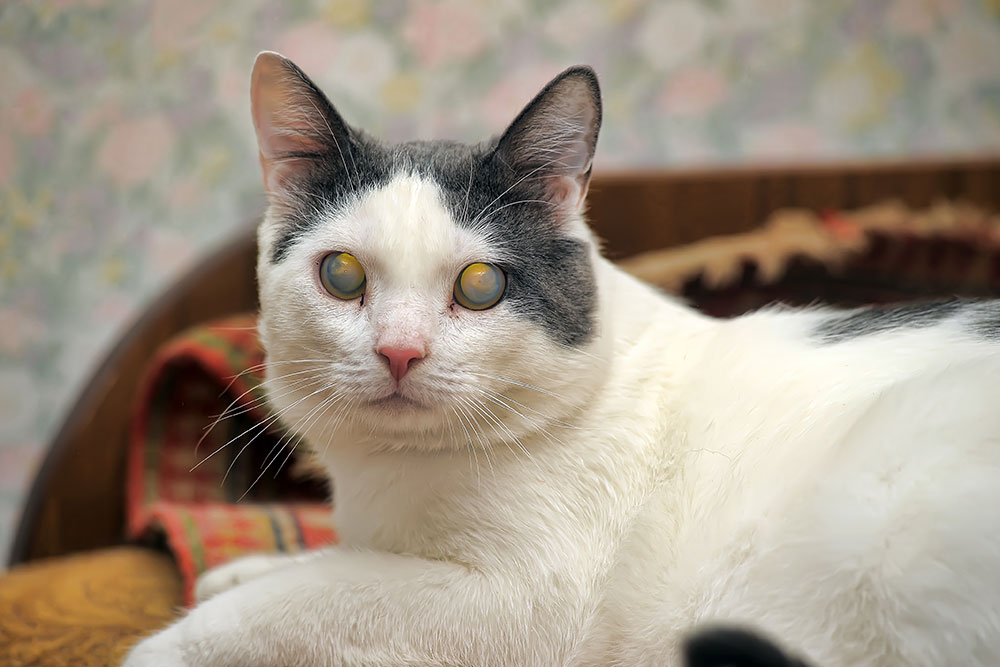
- Dilated pupils that do not constrict normally in bright light
- Increased reflectivity or “shine” from the eyes at night
- Bumping into objects in low-light conditions
- Hesitation navigating unfamiliar environments
Vision loss generally begins with night blindness as rod photoreceptors deteriorate first. Pets may navigate well during the day but seem disoriented or anxious at dusk. As the disease progresses and cone photoreceptors are affected, daytime vision gradually declines.
The rate of progression depends largely on whether your pet has an early-onset or late-onset form. Early-onset forms can affect puppies and kittens within the first few months of life and may progress to complete blindness within one to two years. Late-onset forms develop in adult pets and often progress more slowly over several years.
The prcd-PRA form, for example, typically manifests in middle-aged dogs with gradual progression.
If you notice any vision changes in your pet, scheduling a comprehensive eye examination allows us to evaluate retinal health thoroughly and determine whether PRA or another condition is responsible.
Advanced Diagnostic Techniques for Accurate Diagnosis
Diagnosing PRA requires specialized tools and expertise. At Veterinary Vision Center, our comprehensive ophthalmic examination includes indirect ophthalmoscopy and slit-lamp biomicroscopy to visualize retinal changes. However, the gold standard for PRA diagnosis is electroretinography (ERG).
ERG measures the electrical responses of retinal cells to light stimulation. During this non-invasive test, specialized contact lenses are placed on the eyes to record photoreceptor responses. In PRA, these responses are diminished or absent, confirming retinal degeneration.
ERG can detect retinal dysfunction before visible changes appear and before obvious clinical signs develop.
Benefits of early diagnosis include
- Confirming diagnosis and prognosis
- Implementing management strategies sooner
- Guiding breeding decisions
- Monitoring disease progression
- Ruling out other treatable causes of vision loss
Our advanced diagnostic services provide the specialized equipment and expertise required for ERG and other sophisticated ophthalmologic testing.
Breed-Specific Forms and the Role of Genetic Testing
PRA includes many distinct forms, each caused by different genetic mutations affecting specific breeds. Genetic testing has transformed our ability to identify these mutations and guide both medical and breeding decisions.
Examples of PRA variants include
- Rod-cone dysplasia
- Photoreceptor dysplasia
- Progressive rod-cone degeneration (PRCD testing)
- Rcd4-PRA
Breed-specific testing is available for many breeds, including Bengal cats, Greyhounds, Shetland Sheepdogs, Irish Setters, Basenjis, Italian Greyhounds, and Golden Retrievers.
Genetic testing identifies whether animals are clear, carriers, or affected, allowing informed breeding choices and clearer prognoses for diagnosed pets. At Veterinary Vision Center, we coordinate testing through reputable laboratories and help clients interpret results.
Advances in Gene Therapy and Emerging Treatments
Although PRA has long been considered incurable, recent advances in gene therapy for vision restoration offer promising future possibilities.
In some research settings, retinal gene therapy has restored functional vision in dogs with specific PRA mutations. These studies demonstrate potential for slowing or halting disease progression.
Candidacy depends on factors such as:
- The specific genetic mutation
- Stage of disease
- Remaining functional retinal tissue
- Availability of trials or approved therapies
Other areas of investigation include neuroprotective treatments, stem cell therapy, and retinal prosthetics.
While treatment availability remains limited, our team stays informed of emerging research and can refer appropriate candidates when options become available.
Helping Your Pet Thrive With Vision Loss
Dogs and cats adapt remarkably well to gradual vision loss, relying on smell and hearing to navigate their environment confidently. With thoughtful management, most pets maintain excellent quality of life.
Environmental modifications
- Keep furniture placement consistent
- Use textured mats near food bowls and doorways
- Add sound cues near entrances
- Ensure good lighting
- Block access to hazards until navigation improves
Safety considerations
- Avoid rearranging furniture
- Supervise outdoor time
- Use harnesses instead of collars
- Introduce new environments gradually
Helpful resources for supporting blind dogs and managing blind cats emphasize enrichment activities that engage non-visual senses.
Ongoing monitoring through our ophthalmology services remains important to address secondary conditions such as cataracts or glaucoma.
Moving Forward Together
While progressive retinal atrophy remains incurable in most forms, affected pets can live full, joyful lives with proper management and support. Early recognition, thoughtful environmental adjustments, and specialist care make a meaningful difference.
At Veterinary Vision Center, we combine advanced diagnostics with compassionate, family-centered care to support pets and their people at every stage of PRA progression.
If you’ve noticed vision changes or have concerns about hereditary eye disease, we invite you to contact our practice to schedule a comprehensive ophthalmology consultation. Your pet’s comfort, safety, and quality of life are always our priority.

Leave A Comment