

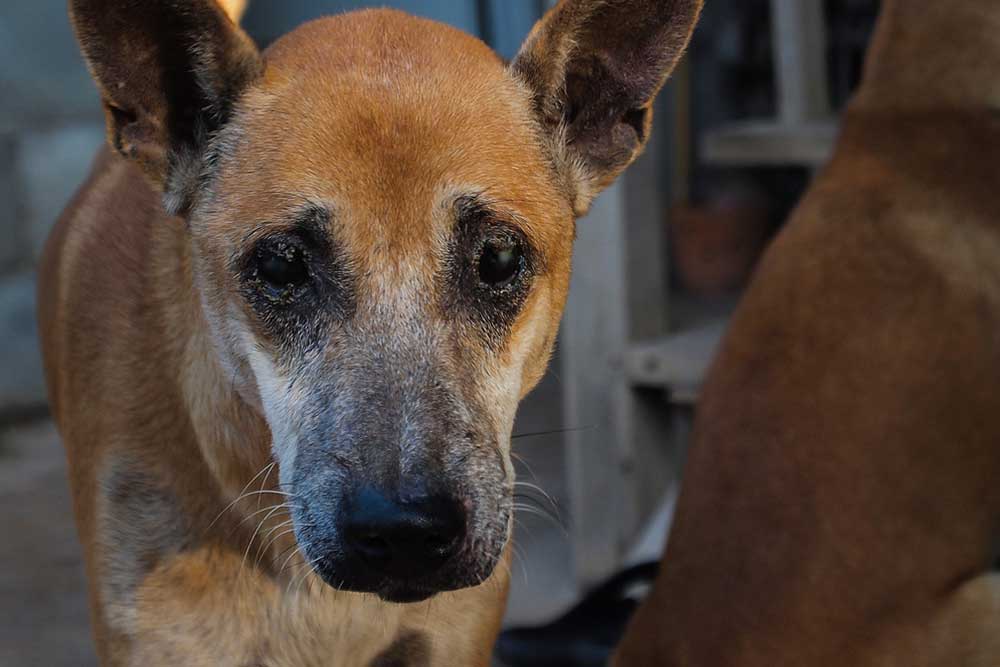
A dog who loses sight almost overnight might be facing SARDS, which is permanent, or a different cause that can still be reversed, and only testing can tell the two apart. Sudden Acquired Retinal Degeneration Syndrome (SARDS) destroys the retina and causes irreversible blindness, with no proven treatment that brings the vision back. Other causes of rapid vision loss, including retinal detachment, glaucoma, and inflammation of the optic nerve, can sometimes be slowed or reversed when they are caught early. That is why the distinction is so urgent: one path is about helping a newly blind dog adjust and thrive, the other is a narrow window where fast treatment can protect what sight remains. Because a SARDS eye often looks completely normal at first, appearance alone cannot answer the question.
Veterinary Vision Center focuses entirely on veterinary ophthalmology in Shreveport, which is exactly the level of workup a sudden loss of sight calls for. Because most families reach us after their family vet has already flagged the blindness, we start where a general exam ends: a full retinal evaluation, tonometry to rule out glaucoma, and ocular ultrasound to check for a retinal detachment. Our board-certified ophthalmologist can separate SARDS from the treatable causes of sudden blindness and give you a clear, honest picture of what your dog is facing. If your dog’s vision has changed quickly, request an appointment so we can look while the window for the reversible causes is still open.
SARDS in a Nutshell
- SARDS blindness comes on fast, over days to a few weeks, and once the retina’s cells have died the vision loss is permanent.
- The eye often looks completely normal in the early days, which is why appearance alone can’t tell SARDS apart from causes that are still treatable.
- Many affected dogs also drink more, urinate more, eat more, and gain weight, so the workup usually looks well beyond the eye itself.
- No therapy has been proven to restore sight, but dogs adapt to blindness remarkably well and most go on to live full, happy lives.
What Is SARDS in Dogs?
SARDS is the sudden death of the retina’s light-sensing cells, which produces blindness that develops over days to a few weeks and doesn’t come back. The confusing part is that the eye itself often looks normal on examination early on, which makes the diagnosis hard to square with what you’re seeing at home.
With SARDS, there’s no outward cloudiness and no obvious injury, just a dog who slowly stops being able to see while the eye keeps looking healthy from the front. It can appear in any dog, though the breeds most often affected include Miniature Schnauzers, Dachshunds, and Pugs, usually between seven and ten years of age. Our board-certified ophthalmologist can look past that normal-looking surface and check whether the retina is still responding at all.
What Are the First Signs of SARDS Families Notice at Home?
The first signs families notice are behavioral: a dog bumping into furniture, hesitating at the top of the stairs, missing a tossed treat, or seeming lost in rooms they’ve navigated for years. Widely dilated pupils that don’t shrink much in bright light are another common clue that the change is happening inside the eye.
Because dogs lean on memory and scent to move through familiar rooms, the vision loss of sudden acquired retinal degeneration often looks even more abrupt than it truly is, staying hidden until it turns severe. Sudden vision changes deserve a fast look rather than a few days of watching, so if your dog is suddenly disoriented, it’s worth being seen right away.
What Other Changes Show Up With SARDS?
SARDS often isn’t just an eye problem. Many dogs also start drinking more water, asking to go out more often, acting hungrier than usual, gaining weight, and slowing down, sometimes before the vision loss and sometimes right alongside it. That same cluster of changes also matches the signs of Cushing’s syndrome, a hormone condition, which is why the workup usually reaches well beyond the eyes.
In the early weeks, dogs with SARDS also tend to have blood that is more prone to clotting than it should be, one more sign that the whole body is involved. Because these changes can point toward a hormone problem, we often coordinate with your primary veterinarian so blood work and your dog’s overall health get attention at the same time the eyes are being evaluated.
Why Does SARDS Happen?
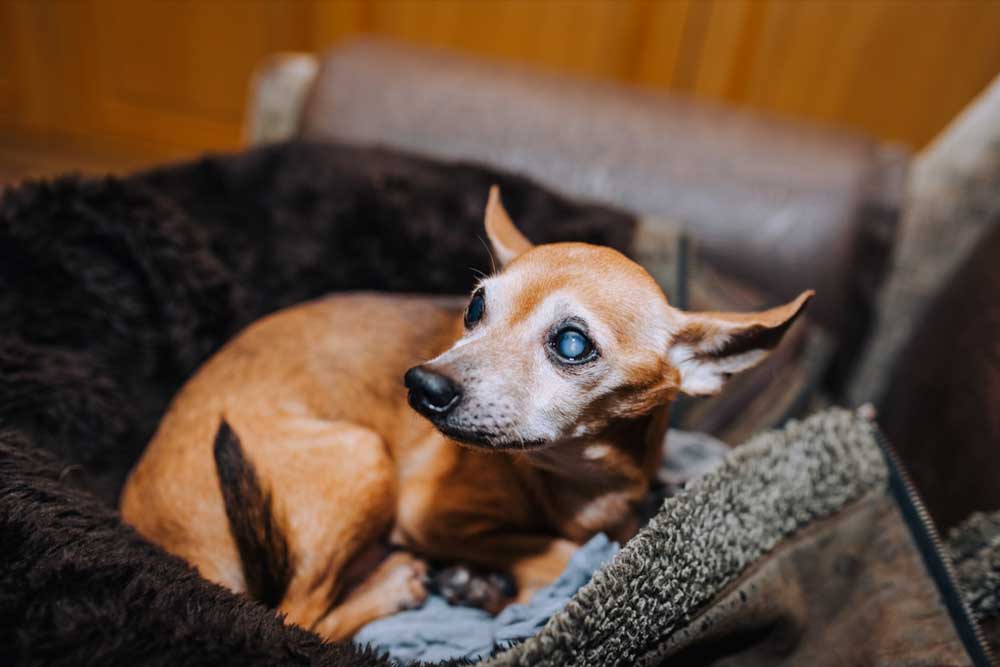
The honest answer is that no one knows yet what causes SARDS. Researchers have strong leads rather than a confirmed mechanism, and the systemic signs that travel with the vision loss have shaped where the science is looking.
One leading line of thinking frames it as an immune-mediated endocrine disease. For now, the cause stays an open question, though research is being conducted at several veterinary universities to learn more about causes and treatments.
How Is SARDS Diagnosed?
Diagnosing SARDS is largely a process of ruling out the other causes of acute blindness, because several of them look identical from the outside yet respond to treatment when caught early. The goal is to catch a reversible problem before the window closes, and to confirm SARDS only once the treatable causes are off the table.
The workup generally moves through a few layers:
- Full ophthalmic exam: A close look at the front and back of the eye, including the retina, checks for the structural problems a normal-looking eye can still hide.
- Pressure and detachment checks: Tonometry measures the pressure inside the eye to rule out glaucoma, and ocular ultrasound looks behind the eye for a retinal detachment when the view is blocked.
- The retinal response test: A specialized test called electroretinography measures whether the retina is still reacting to light, and a flat response is what ultimately confirms SARDS.
- Blood work: Because the systemic signs point toward whole-body disease, lab work is often part of the picture rather than an afterthought.
A specialized ophthalmic workup matters because separating a permanent problem from a treatable one isn’t something an outside exam can do on its own.
Why Does Ruling Out Other Causes Matter So Much?
Ruling out the other causes matters because several of them are treatable and vision-threatening on a clock, and every day of watching-and-waiting can cost sight that might have been saved. Nearly every sign SARDS produces can also be produced by a condition that responds to treatment:
| Symptoms of SARDS | Treatable conditions that can cause the same thing |
| Sudden blindness | Retinal detachment from trauma or high blood pressure, glaucoma, rapidly forming cataracts, optic nerve inflammation |
| Drinking and urinating more | Diabetes, Cushing’s syndrome, kidney disease |
| Bigger appetite, weight gain, and low energy | Hypothyroidism, Cushing’s syndrome |
| Anxiety, confusion, or disorientation | Brain tumors, canine cognitive dysfunction, and other neurologic conditions |
| Wide pupils that barely react to light | Optic nerve disease, certain medications and toxins |
None of these can be told apart from the couch, and several treatable eye conditions mimic SARDS closely in those first disorienting days. That overlap is the whole argument for a prompt exam: a dog who suddenly can’t see should be examined right away rather than monitored at home, because the list above is full of diagnoses where fast treatment changes the ending.
Is There a Treatment That Restores Vision in SARDS?
No treatment has been proven to restore or preserve vision in SARDS, and the blindness is permanent once the retinal cells have died. Families will run into therapies promoted online that promise to bring sight back, and part of a specialist’s job is helping you tell the supported options from the ones with no evidence behind them.
The honest framing isn’t false hope and isn’t abandonment. It’s redirecting energy toward the parts of your dog’s care that still change something. If you come across a treatment being promoted, run it past our team before spending money or hope on it, and we’ll tell you plainly what the evidence does and doesn’t show.
Can a Blind Dog Still Live a Good Life?
A blind dog can absolutely live a full, happy life, and this is the reassurance that matters most after a hard diagnosis. Dogs rely on scent and hearing far more than sight to begin with, so they adapt to vision loss much better than their people expect, often within a few weeks of settling into new routines.
Most families are surprised by how much of supporting a blind dog comes down to staying consistent. The adjustment period is usually harder on the family than on the dog, and grief over the diagnosis is normal and worth feeling. Give yourself room for it. Your dog, meanwhile, is often already busy re-mapping the house by nose, and the Shreveport evening walk you’ve always taken together tends to be one of the easiest routines to keep.
What Home Adjustments Help a Blind Dog?
A handful of simple, consistent changes do most of the work of helping a newly blind dog feel secure. The best everyday adjustments at home are the simplest ones.
- Keep the layout consistent: Furniture, water bowls, and beds stay put so the mental map a blind dog builds doesn’t keep getting erased.
- Lean on scent and sound: Scent markers at doorways, textured mats near key spots, and a bell on your shoe or another pet help your dog orient.
- Warn before you touch: A calm word before you reach out prevents the startle that can come when a dog can’t see a hand approaching.
- Secure the hazards: Baby gates at stairs and fencing around pools or ponds close off the dangers a dog can’t see coming.
- Consider a physical guard: A halo-style guard such as Muffin’s Halo forms a lightweight bumper around a dog’s head, cushioning the walls and table legs a blind dog meets by surprise.
Routine and enrichment matter as much as safety: familiar walks, food puzzles, and plenty of nose work keep a blind dog engaged and confident.
What Does Ongoing SARDS Research Tell Us?
SARDS is an active area of research, which means the understanding of it keeps moving even though answers come slowly. Defining what causes the condition is the necessary first step before any real treatment can exist.
Active clinical trials are working to pin down that cause right now, and the biology behind SARDS is under study at veterinary research centers. This research may not change the outcome for today’s patients, but it’s the reason the long-term outlook isn’t fixed in place.
Frequently Asked Questions About SARDS in Dogs
Is SARDS painful for my dog?
SARDS itself isn’t considered a painful condition. The retinal cells stop working, but the process doesn’t cause the aching, squinting, or rubbing that comes with problems like glaucoma or a corneal ulcer. That’s one way it differs from some of the treatable causes of sudden blindness, several of which do hurt. If your dog seems to be in discomfort, that points toward a different diagnosis and is worth having checked quickly.
Can SARDS be reversed if we catch it early?
Unfortunately, SARDS can’t be reversed, even when it’s caught in the first day or two, because the light-sensing cells have already died. Catching it early still matters, though, because a fast exam is how the treatable look-alikes get ruled in or out. The urgency is about protecting a dog whose blindness might actually be reversible, not about salvaging vision from SARDS itself.
Will my other dogs or future dogs get SARDS?
SARDS isn’t contagious, so your other pets aren’t at risk from a diagnosed dog. Because the cause is still unknown, no confirmed hereditary pattern exists either, though certain breeds do appear more often in the affected group. No screening test predicts it ahead of time, and nothing has been proven to prevent it, which is part of why ongoing research into its cause matters so much.
Facing a SARDS Diagnosis Together
SARDS is a hard diagnosis to receive, and the loss of your dog’s sight is real. What we can promise is that a blind dog can live a full, happy life, and most families are genuinely surprised by how quickly their dog adapts. Lean on your veterinary team for the diagnosis, the systemic workup, and the adjustment that follows. If your dog’s vision has changed suddenly, schedule a consultation with Veterinary Vision Center in Shreveport so we can look while the window for the reversible causes is still open.


Leave A Comment