

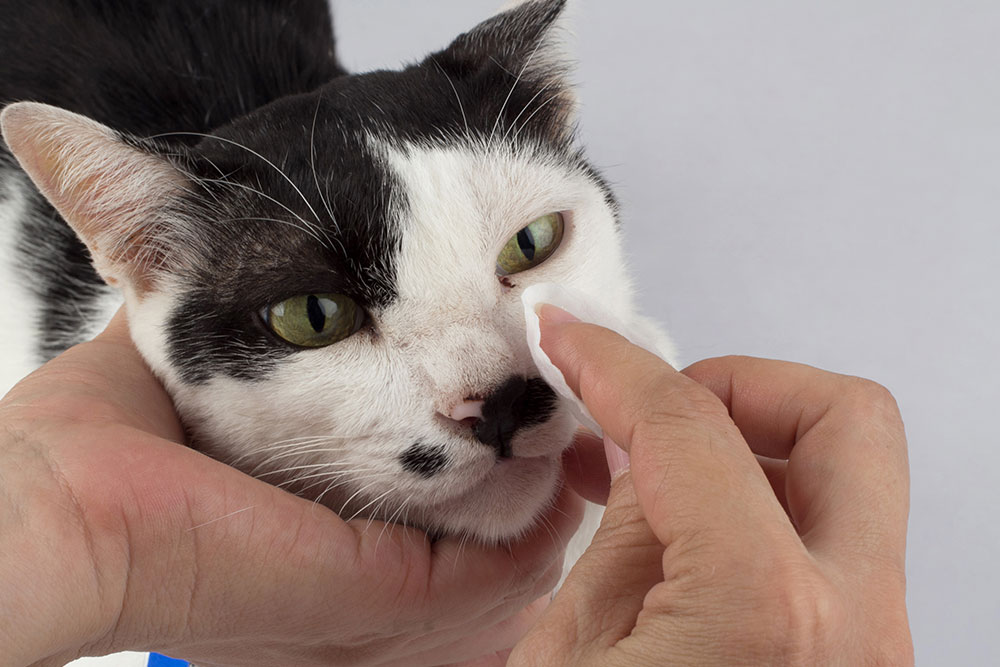
When your pet is recovering from eye surgery or managing a serious eye condition, keeping the area around the eyes clean is part of the treatment, not just tidying up. Normal discharge and everyday bacteria build up quickly, and a healing eye cannot afford that contamination. The reassuring part is that gentle, correct cleaning genuinely helps. The risk is in the technique: too much pressure on an eye that is fragile after surgery, a wipe that catches a suture, or scrubbing at one spot until you dislodge a graft, flap, or plug can set recovery back. This is careful cleaning in service of healing, a different job than a quick face wipe on a healthy pet.
At Veterinary Vision Center, the go-to referral veterinary ophthalmology practice in Shreveport, Dr. Pierce and the team treat eye problems that have moved past what a regular vet visit can resolve, from deep corneal ulcers and dry eye to glaucoma, cataracts, and eyelid surgery. When your pet heads home after a procedure or begins managing a chronic condition, how you clean and support that eye becomes part of how well it heals, so we send you home knowing exactly what to do and what to avoid. If your veterinarian has recommended a specialist consult, or your pet is recovering from eye surgery and you want to be certain you are cleaning safely, request an appointment or ask us to walk you through the aftercare in person.
Core Points
- After eye surgery or with a serious eye condition, keeping the area clean stops normal discharge and bacteria from contaminating a healing surface.
- Pressure, tugging, or scrubbing can disrupt sutures, dislodge a graft or plug, or strain a fragile post-surgical eye, so patience and a light touch matter most.
- Veterinary ophthalmic products like Optixcare and Lid N’Lash wipes and gel, sterile saline eye wash, and a warm compress are the safe tools; contact lens solution and human medicated drops are not.
- Soften discharge completely and lift it away only at the very end, and rinse with saline 10 to 15 minutes before medicated drops so you do not wash the medication down the tear duct.
Why Does Keeping the Eye Clean Matter So Much After Surgery or With Eye Disease?
Around a healing or diseased eye, discharge and normal skin bacteria pile up fast, and left in place they can contaminate an incision, a graft, or a raw corneal surface that has few defenses of its own. Gentle, regular cleaning keeps that buildup from turning a recovering eye into an infected one, which is one of the main things aftercare is protecting against.
It helps to know what can and cannot hurt the eye. Your gentle fingers and a soft cloth won’t damage the surface, but your pet’s own paws and toenails absolutely can, which is why the e-collar your pet came home in stays on until we say otherwise, even during the cleaning you do. Most pets actually come to enjoy having the area kept clean once it feels gentle and predictable. The goal through every step is simple: support the eye your veterinary team is working to heal, and never add a setback in the name of tidiness.
What Can Go Wrong If You Clean a Healing Eye the Wrong Way?
The eye that just had surgery or is fighting serious disease is more fragile than a healthy one, so a technique that would be harmless on a normal pet can cause real harm here. Most problems come from three habits: too much pressure, wiping toward the eye or an incision, and picking at debris before it is soft enough to release on its own.
Here is what careless cleaning can undo:
- Loosened or torn sutures: Dragging a cloth across a fresh eyelid incision or catching a stitch can pull the repair apart before it has healed.
- Pressure on a fragile eye: After cataract, glaucoma, or other surgery inside the eye, even gentle pressure on the eyeball is risky, so cleaning happens on the fur and lids around the eye, never by pressing on it.
- A dislodged graft, flap, or plug: When a graft, conjunctival flap, or plug is protecting or repairing the cornea, scrubbing or rubbing can shift it, which can mean a return to surgery.
- Fresh contamination: Reusing a dirty cloth, using an unwashed hand, or touching the eye with a product that is not sterile can introduce the very bacteria you are trying to keep out.
- Washed-out medication: Flushing the eye right after drops or ointment can rinse the medication straight down the tear duct before it has a chance to work.
None of this means cleaning is dangerous. It means the how matters, and when you are unsure, it is always safer to pause and call us than to push through.
Which Cleaning Supplies Are Safe for a Fragile or Post-Op Eye?
Safe cleaning around a healing eye uses a short list of gentle, eye-appropriate tools: veterinary ophthalmic wipes or gel, sterile saline eye wash, and a clean warm compress. The point is to soften and lift discharge from the fur and lids without introducing anything harsh, abrasive, or contaminated to a surface that is already vulnerable.
The safest supplies for cleaning a pet’s eyes are the ones made for the job:
- Veterinary ophthalmic wipes: Products like Optixcare and Lid N’Lash wipes dissolve debris, leave no residue, and will not harm the eye’s surface if they touch it. The Lid N’Lash wipes are shaped like a cleansing pad and carry more solution for heavier crusting.
- Ophthalmic cleansing gel: Lid N’Lash gel goes onto the fur or onto a gauze pad, which lets you control how much you use and saturate a heavily crusted area so it lifts away gently.
- Sterile saline eye wash: Available over the counter, this rinses the surface safely and as often as needed. Time it 10 to 15 minutes before any medicated drops or ointment, so the rinse does not carry the medication down the tear drainage system before it works.
- A warm, wet compress: A clean, warm, damp washcloth, paper towel, or gauze held to the eye for 5 to 15 minutes, two to four times a day, soothes a sore eye, relaxes the lids, and softens crust so it releases without pulling.
Just as important is what never belongs near a healing eye:
- Contact lens solution: It contains enzymes that damage the surface of the eye. Do not use it, even in a pinch.
- Human medicated eye drops: Products for redness, allergies, or dryness can harm a pet’s eye or mask a problem your specialist is tracking.
- Hydrogen peroxide, rubbing alcohol, soaps, and fragranced wipes: All are harsh enough to burn a delicate or post-surgical surface.
- Cotton balls: They shed fibers that cling to a moist or healing cornea; use a smooth cloth or gauze instead.
When you are not sure which product fits your pet’s procedure, we are glad to give you veterinary-approved eye care recommendations so you are not guessing.
How Do You Clean the Eye Step by Step Without Setting Recovery Back?
The golden rule for a healing eye is patience: soften the discharge completely first, and only lift it away at the very end, when it is soft and barely clinging. You are cleaning the fur and lids around the eye, never the eyeball itself, and gentleness beats thoroughness every time.
- Wash your hands and gather clean supplies. Start with clean hands, a fresh cloth or gauze, and your pet’s prescribed products so nothing contaminated goes near the eye.
- Settle your pet and let them see the cloth. A calm moment, ideally when your pet is already relaxed, makes the whole thing easier and safer around a sore eye.
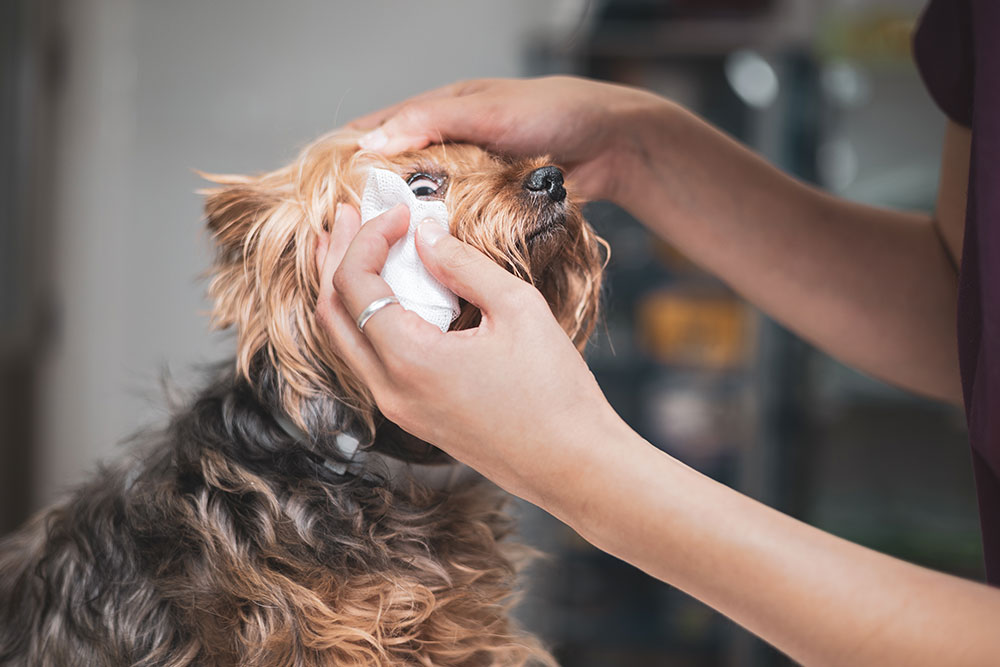
- Apply warmth and let it work. Hold a warm, damp compress or a saturated ophthalmic wipe gently against the crusted area and soften the discharge for several seconds to a few minutes, without pressing on the eye.
- Lift, do not scrub. Only once the debris is soft, wipe it gently outward from the inner corner and away from the eye and any incision, never toward the eye or a suture line.
- Never pull discharge off of the eye itself. Sometimes that “goop” is really plugging up a hole in the eye’s surface. If you’re not sure, just take a photo and give us a call.
- Never press on the eye. Pressure can damage a fragile healing process.
- Use a fresh cloth or section for each eye. If one eye is infected or post-surgical, a clean surface for each side keeps you from carrying anything across.
- Time medications correctly. If drops or ointment are due, give them after cleaning, and remember the 10 to 15 minute gap after a saline rinse.
- End on a treat. Reinforce the whole routine with a reward and calm praise so your pet keeps tolerating it.
If crust will not lift after gentle, patient soaking, stop and leave it for us. Forcing it is exactly how a fragile eye gets hurt. Grooming the hair around the eyes so it’s short is a good idea before any surgical procedure or if your pet has chronic thick discharge, like with dry eye.
How Do You Clean Around Specific Surgeries and Conditions?
The safest cleaning and eye medication application routine depends on which procedure or condition you are managing, and your discharge instructions always come first. Still, a few patterns hold across the board: stay off the eyeball itself, keep tension away from any suture line, and when something is protecting the cornea, clean around it rather than over it.
After Eyelid Surgery
After eyelid surgery, such as an entropion repair or a mass removal, the stitches sit right at the delicate lid margin. Clean the fur and skin around the incision without dragging across it or putting tension on the sutures, wiping away from the line rather than along it. A warm compress can ease swelling if we have recommended one, and any gap in the stitches, increasing swelling, or discharge from the incision is worth a call.
After Cataract, Glaucoma, or Other Intraocular Surgery
After surgery inside the eye, the eyeball is fragile and pressure is the enemy. Keep all cleaning on the surrounding fur and lids, never on the eye, and use gentle saline rinses rather than any wiping of the surface. These pets are usually on several medications, so the timing gap between a saline rinse and drops matters, and the e-collar stays on around the clock. Report new redness, cloudiness, or a sudden change in comfort promptly.
With Severe Dry Eye, or After Dry-Eye Surgery
Severe dry eye and other ocular conditions produce thick, ropey mucus that returns no matter how often you clear it, so gentle, frequent cleaning becomes part of daily life. A warm compress loosens the mucus, saline rinses flush it, and ophthalmic wipes lift what remains, always removed at the end when it is soft. If your pet has had dry-eye surgery or has small plugs placed to conserve tears, clean gently around the area so you do not disturb them.
Around a Tarsorrhaphy or a Corneal Graft
When the eyelids are partially stitched closed with a temporary tarsorrhaphy to protect the cornea, or a graft or flap is repairing a damaged cornea, the rule is hands off the repair itself. Clean only the outside of the closed lids or the fur around the graft, never pull at the sutures or try to open the lids, and never rub over a graft. A gentle compress on the closed lids is usually fine, but check with us first. Healing corneal ulcers and grafts are fragile, and a dislodged repair can mean going back to surgery.
How Do You Handle a Sore or Post-Op Pet During Cleaning?
A pet who is protecting a genuinely sore or freshly operated eye needs a gentler, slower approach than a healthy pet learning face care, and forcing it risks both the eye and your fingers. The aim is to make a hand near the face predict good things, with short, calm, reward-based sessions rather than restraint. This might mean your pet’s eye looks a little gross for a few days instead of pushing toward cleaning, and that’s okay.
Build cooperation in tiny steps: touch the cheek and treat, bring the cloth close and treat, then work up to a brief wipe. Pairing each step with rewards is the heart of positive training and creates real willingness instead of the dread that force builds. Comfort with handling and grooming is built a little at a time, so keep sessions short and end while your pet is still relaxed. One caution specific to a post-op or painful eye: if your pet suddenly resists a routine they used to tolerate, that can mean the eye hurts more, not that they are being difficult, and guidance from a board-certified ophthalmologist helps you tell a behavior hurdle from a pet guarding real pain.
When Should You Stop and Call Us Instead of Cleaning?
Around a healing or seriously affected eye, some changes mean put the cloth down and call, because they signal a problem cleaning cannot fix. Increasing redness, swelling, or discharge after surgery, a suture that looks loose or missing, new cloudiness, squinting or pain, or discharge you cannot gently clear all warrant a prompt call to us.
Because your pet is already under specialist care, we would much rather hear from you early than have you push through a cleaning that a sore eye is telling you to stop. A pet pawing at the face, holding the eye shut, bumping into things, or newly sensitive to light needs to be seen, not cleaned harder. When your primary vet has taken things as far as a general exam allows, our advanced diagnostics look deeper to find what is behind the change. If something about a healing eye worries you, reach out or schedule an exam, and for something sudden and severe outside our regular Monday through Friday hours, call the emergency line or head to your nearest veterinary ER, since some eye problems truly cannot wait.
Frequently Asked Questions About Cleaning a Healing Eye
Can I use human saline or contact lens solution to clean the eye?
Sterile saline eye wash is fine for softening and rinsing discharge, and it is a mainstay of eye aftercare. Contact lens solution is not: it contains enzymes that can damage the surface of the eye, so keep it away entirely. Skip medicated human eye drops too, since they can harm a healing eye or hide a change your specialist is watching for. When in doubt, ask us what is safe for your pet’s specific situation.
How do I clean around the stitches after my pet’s eyelid surgery?
Work around the incision, not across it. Soften any crust with a warm compress or ophthalmic wipe, then gently lift it away from the suture line without dragging over the stitches or pressing on them. Wipe outward, use a clean surface, and never pull at a stitch that seems caught. If a suture looks loose, the area is swelling, or discharge is coming from the incision, call us before cleaning again.
My pet has severe dry eye with constant mucus. How often should I clean?
Severe dry eye often needs gentle cleaning several times a day, because the thick mucus keeps returning. A warm compress to loosen it, a saline rinse to flush it, and an ophthalmic wipe to lift the rest is a good rhythm, always removing debris at the end when it is soft. Pair the cleaning with the tear-stimulating and lubricating medications we have prescribed, spacing saline rinses about 10 to 15 minutes before medicated drops.
Can I clean the eye if my pet has a tarsorrhaphy?
Yes, but only the outside. With the lids partially stitched closed to protect the eye, clean the fur and the surface of the closed lids gently, and never try to open the lids or pull at the sutures. A light warm compress on the closed lids is usually fine if we have okayed it. Watch for discharge building up behind the lids or sutures that look loose, and call us if you see either.
Caring for Your Pet’s Eyes Through Treatment and Recovery
Cleaning a healing or seriously affected eye comes down to the same few things: the right eye-safe supplies, a patient hand that softens before it lifts, cleaning around the eye rather than on it, and the good judgment to stop and call when something looks off. Done gently and consistently, that daily care protects the work your specialist has put into the eye and helps it heal.
When home care reaches its limit, or you simply want to be sure you are doing it right, that is exactly what we are here for. Our team can look deeper with advanced ophthalmic diagnostics and build the aftercare plan with you. If your primary vet has recommended a specialist, or your pet’s eye is not healing the way it should, book a visit and we will take a closer look, together.


Leave A Comment